 clayworkshop.com
Group Firings and Shared Kiln Logs
You will be able to coordinate firing schedules, optimize kiln space, and document results collaboratively.
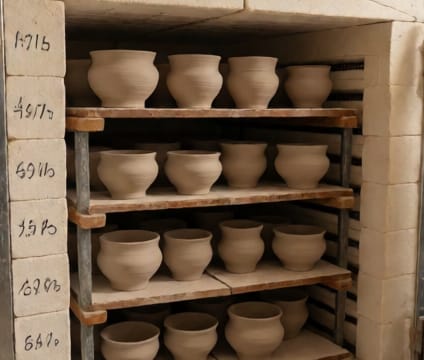
Begin by gathering all participant pieces and sorting them by firing temperature and atmosphere needs. Group cone 6 stoneware items together, separate from low-fire earthenware or raku-ready pieces. Use kiln shelves strategically, arranging pieces to avoid overlap while maximizing space—leave at least a finger-width gap around each item. Mark shelf positions and load locations on a diagram before loading begins.
Set up a shared digital or printed log with columns for piece ID, clay body, glaze, cone, loading side (e.g., shelf A, B), and firing date. Assign one person to monitor and enter data in real time during loading, firing, and cooling. Include notes on kiln behavior—like cooldown rate or unexpected sagging—to help troubleshoot future loads.
After firing, participants review logs together, comparing expected vs. actual results. Use this shared record to adjust future firings—e.g., adding a preheat hold for moisture-heavy pieces or shifting loading zones based on hot/cold spots. Consistent logging builds institutional memory, so even new members quickly learn how the kiln behaves and how to anticipate outcomes.
Key points
- Sort pieces by cone and atmosphere before loading.
- Log real-time data with clear columns and notation.
- Review results collectively to refine future firings.