 dailybriefing.com
Automakers accelerate electric vehicle investment
Leading automakers are increasing capital spending, expanding battery production, and reshaping dealer networks to meet growing demand for electric vehicles.
Investments focus on vertically integrating battery supply chains and building dedicated EV assembly lines. Factories are being retrofitted or newly constructed to support high-volume production of electric platforms. This shift requires years of planning and substantial upfront costs.
Dealer relationships are being restructured as service needs change—fewer internal combustion engine repairs, more software and battery diagnostics. Some manufacturers pursue direct-to-consumer models to control the full experience, altering traditional distribution dynamics.
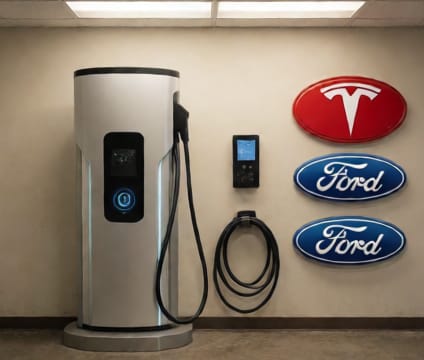
Charging infrastructure remains a priority, with automakers partnering with third parties or launching networks of their own. Fast-charging access directly impacts consumer confidence and travel feasibility, especially for long-distance use.
Market reactions vary by region, influenced by local incentives, grid readiness, and consumer preferences. Companies balance risk across portfolios, continuing development of hybrid options while building EV capacity. Timing and scale determine competitive advantage in this transition.
Key takeaways
- Battery production is expanding to meet demand
- Dealer networks are adapting to EV service needs
- Charging access is critical to consumer adoption
- Regional factors shape investment priorities
More in Industry Pulse

New data privacy rules take effect in three states
Three states have implemented new data privacy laws requiring businesses to clarify data collection, honor opt-out requests
Read more →
Healthcare staffing shortages persist in rural areas
Rural healthcare facilities continue struggling to recruit and retain clinicians despite national hiring surges, threatening
Read more →