 advancedweighttraining.com
Dynamic Flexibility Progressions
Progressive dynamic stretching enhances tissue tolerance and joint range without compromising strength or power output before training.
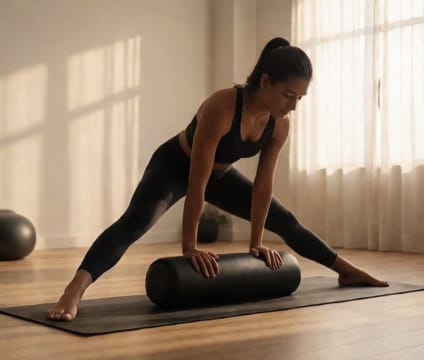
Dynamic flexibility involves controlled, sport-specific movements that take joints through full ranges of motion while activating surrounding musculature. Unlike static stretching, it does not reduce contractile force production and is best applied during warm-ups. The goal is to gradually increase blood flow, tissue temperature, and neuromuscular coordination in preparation for higher-intensity efforts.
Effective progressions start with small-amplitude, low-speed motions and escalate to larger, faster motions as the body warms. This stepwise approach trains the nervous system to manage increased eccentric loads and prepares connective tissues for sudden directional changes. Overloading too quickly bypasses protective proprioceptive feedback and can strain muscles or ligaments.
Integrating multiplanar movements—forward, side-to-side, and rotational—ensures balanced loading across joints and mimics real-world movement demands. Repetitions should be moderate, typically 8–12 per exercise, focusing on smooth control rather than aggressive extension. This method builds functional range while maintaining readiness for subsequent strength or speed tasks.
Practical tips
- Begin with 5–10 minutes of light cardio before dynamic work.
- Match movement speed and direction to your main workout.
- Stop if sharp pain occurs—no bouncing or forced end ranges.
General information, not medical advice. More on this from MedlinePlus (US National Library of Medicine).
More in Recovery Integration

Neuromuscular Recovery Windows
Optimizing rest periods between high-intensity neuromuscular sessions ensures central nervous system resilience and maximal
Read more →
Sleep Timing and Quality Marks
Consistent sleep timing aligned with natural circadian rhythms supports hormonal balance, cognitive restoration, and optimal
Read more →