 advancedweighttraining.com
Exercise Selection Logic
Match exercises to training goals, individual biomechanics, and sport demands to ensure safety, specificity, and long-term adaptation.
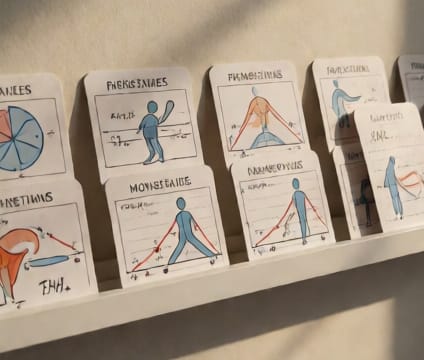
Compound movements like squats, deadlifts, and presses offer broad strength carryover and high efficiency but must be tailored to individual mobility and joint health. Accessory lifts fill gaps by targeting underdeveloped muscles or correcting imbalances. Prioritizing movement patterns over isolated motions supports functional strength and injury resilience.
Sport-specific adaptations rely on movement similarity—consider direction, speed, joint angles, and muscle action types. A sprinter may emphasize hip extension drills and resisted starts, while a powerlifter focuses on full-range strength expression. Exercise choices should replicate key demands without compromising form or recovery capacity.
Progression paths often begin with regressions (e.g., goblet squats) before advancing to loaded variations (back squats, then overhead squats). Introducing complexity too quickly increases error rates and injury likelihood. Mastery of fundamental patterns before adding external load ensures durable strength gains.
Practical tips
- Choose exercises matching sport movement direction.
- Start with regressions before heavy loading.
- Prioritize technique over load in early phases.
General information, not medical advice. More on this from MedlinePlus (US National Library of Medicine).
More in Program Architecture
Macrocycle Phasing Strategies
Organize long-term training into distinct phases that build systematically toward peak performance while minimizing burnout risk.
Read more →
Volume and Intensity Flow Control
Balance training load across sessions to stimulate adaptation while preserving recovery capacity and performance output.
Read more →