 beachrealtors.com
Mariner’s Bluff
Mariner’s Bluff mandates elevated foundations, enforces storm surge overlays, and specifies dune buffer widths affecting buildable area and design flexibility.
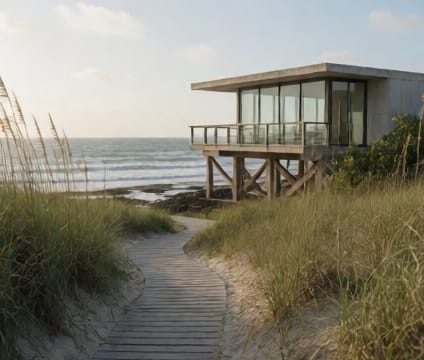
Elevated foundations are not just recommended but required under local code, with minimum floor elevations based on historical surge heights and FEMA zones. Structures often rest on piers or pilings, sometimes with open underbuilds for flood bypass. Buyers should verify existing elevations against current base flood elevations, as older homes may have been built to earlier standards that no longer satisfy underwriting or insurance requirements. The added height can also shift architectural expression, with stairwells, landings, and exterior entries becoming key design elements.
Storm surge overlays layer additional height and structural requirements on top of standard flood zoning, particularly for parcels near inlets or low-lying points. These overlays are mapped by federal and state agencies but interpreted locally, so alignment between jurisdictions matters during appraisals and underwriting. Some overlays shift between zones with cadastral updates, so title examiners often recommend verifying with local planning departments rather than relying solely on flood maps.
Dune buffer widths in Mariner’s Bluff define how close a new structure can come to the upland edge of the dune, typically ranging from 10 to 25 feet depending on slope and vegetation density. These buffers protect both structural integrity and ecological function, and violations often carry heavy remediation costs. Existing homes built before modern codes may be grandfathered, but additions or renovations frequently trigger buffer compliance reviews, especially if grading or clearing is involved.