 clayworkshop.com
Custom Glaze Mixing Ratios
You will be able to formulate reproducible glazes by adjusting base recipes with precise batch measurements.
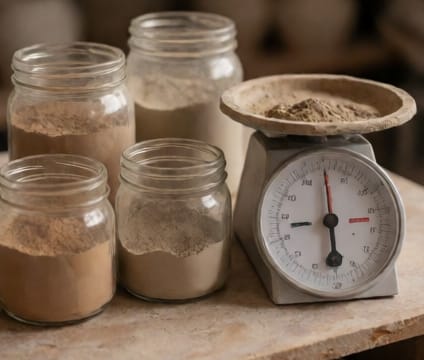
Start by selecting a base glaze recipe appropriate for your clay and target temperature. Weigh each ingredient individually using a digital scale accurate to 0.1 gram—never estimate by volume. Record weights in a consistent format (e.g., grams or parts) and label containers clearly. Begin with the largest quantity to minimize cumulative error, and mix dry ingredients thoroughly before adding water gradually.
When substituting or scaling a recipe, preserve the percentage composition of each component. For example, doubling a 100-gram batch to 200 grams means each ingredient’s weight is multiplied by two, keeping the ratios identical. Always add water last, stirring until no dry spots remain and the slurry achieves a honey-like consistency for even application and predictable shrinkage.
After mixing, sieve the glaze through a 80-mesh screen to eliminate lumps and ensure uniform suspension. Test the glaze on a sample tile bisque-fired to the same cone as your final work. Adjust thickness or opacity by adding water or small amounts of clay, re-sieving after each change. Keep detailed notes so future batches match previous results.
Key points
- Weigh ingredients precisely; never guess by volume.
- Scale recipes proportionally by percentage, not volume.
- Sieving and testing ensure consistency and quality.