 clayworkshop.com
Drying Clay Without Cracking
You will be able to manage drying conditions and use proper techniques to prevent cracks during clay drying.
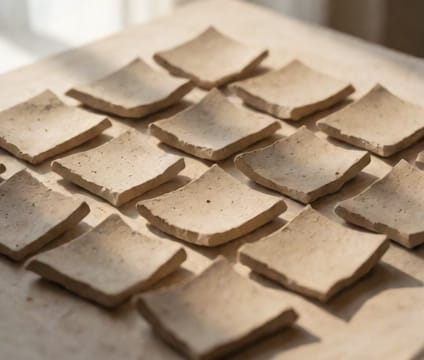
Start with consistent wall thickness across your piece to avoid uneven shrinkage. Trim excess clay from bases and join seams cleanly. If a piece has thick and thin areas, let the thicker parts dry slightly covered with a plastic sheet while thinner sections remain exposed to slow their drying rate.
Control your drying environment by avoiding direct sunlight, drafts, and rapid temperature shifts. Use plastic sheets or humidity-controlled spaces to slow drying on the surface so moisture can escape gradually from inside. Check periodically—when the piece is leather-hard, cover the whole piece with plastic to equalize moisture before full air drying.
When the piece reaches the bone-dry stage, it should be uniformly pale, lightweight, and warm to the touch. Store it in a covered box overnight before loading into the kiln to prevent sudden moisture loss. Any signs of warping or hairline cracks mean adjustments are needed in your next drying cycle.
Key points
- Maintain uniform wall thickness
- Dry slowly and evenly
- Use humidity control and plastic covers