 clayworkshop.com
Preparing Clay for Hand Building
You will be able to condition clay properly to ensure it is workable and free of air bubbles before shaping.
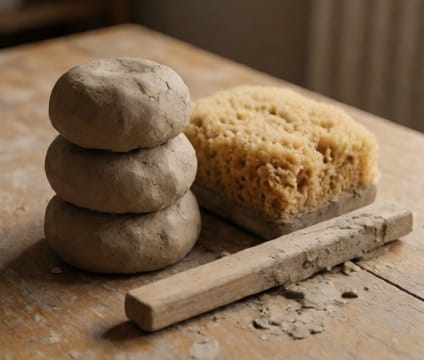
Start by testing your clay for moisture content. If it feels dry or crumbly, it needs conditioning; if it’s too wet, it may need drying. Knead a small portion by hand or use a rib tool to break up surface crust. This helps you assess whether the clay needs wedging, which aligns particles and removes trapped air that could cause cracking or explosions during drying or firing.
Wedge the clay using the ram’s head or spiral method. Begin by slamming the clay down, folding it over, and pushing it away with the heel of your hand. Repeat in alternating directions to distribute moisture evenly and eliminate air pockets. Continue until the clay feels uniform, smooth, and springs back slightly when pressed. This process ensures structural integrity during building.
Once wedged, store the clay in a sealed plastic bag or under damp cloths until ready to use. Keep unused portions covered to prevent drying. When returning to the clay later, re-knead briefly to refresh its workability. Properly prepared clay will hold sharp edges, support its own weight, and allow for clean joins—critical for successful hand-building projects.
Key points
- Check moisture and condition before wedging
- Use ram’s head or spiral wedging technique
- Store prepared clay covered to retain moisture