 mumbaimart.com
Zafarabad Brass Bazaar
A dense, centuries-old hub where generations of artisans keep repoussé, casting, and engraving alive through family-run brass workshops.
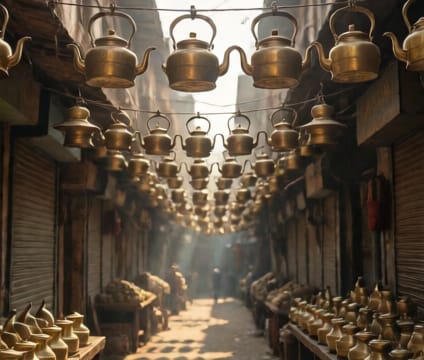
Zafarabad’s alleys echo with the rhythmic hammering of metal as brass vessels take shape on stone anvils. Every shop has a distinctive smell—heat, smoke, and the metallic tang of raw brass—while stacks of finished items line the fronts: betel nut bowls, temple bells, water pots, and intricate hanging lamps. The work flows in stages—melting and casting in one stall, shaping and filing in another, and polishing and decorating in yet another—each often managed by different family members.
Patterns are rarely pre-drawn; instead, motifs like peacocks, lotuses, or geometric borders emerge from instinctive hand movement and years of muscle memory. Artisans use simple tools—chisels, hammers, pincers—but achieve remarkable depth and delicacy through repetition and attention. The market’s strength lies in specialization: one family may master casting, another engraving, another finishing, and yet another retail, forming a tightly knit ecosystem that resists external disruption.
While machines exist, they’re rarely introduced—hand-finishing remains essential for consistency and quality. The same hammers and molds may be used for generations, passing down not just tools but the tacit knowledge of how brass behaves under heat, how much pressure to apply, when to anneal. New apprentices start by sweeping floors and managing the fire, absorbing the rhythm of the work long before touching a hammer.